

CasaFórumDiscussão das ReclamaçõesHow Analyst Martin Protects Stake Casino Instead of Vulnerable Players

How Analyst Martin Protects Stake Casino Instead of Vulnerable Players

183 visualizações 9 respostas |
há 3 dias
|
Adicionar post
há 3 dias
uspt

https://casino.guru/complaints/stake-casino-player-was-able-to-create-a-second-account


I am writing this to warn every player here about the dark reality of how some complaints are handled on this platform, specifically regarding Self-Exclusion and KYC failures.

While I know and respect that some analysts at Casino Guru actually do their jobs fairly and hold casinos responsible when they fail to enforce self-exclusion policies, my handler, Martin, is clearly not one of them. It honestly feels like he didn’t even have the time or decency to read my complaint or look at my evidence. He simply rejected and closed my case because he wanted to get rid of it as quickly as possible.

Here is the scandal of my case:

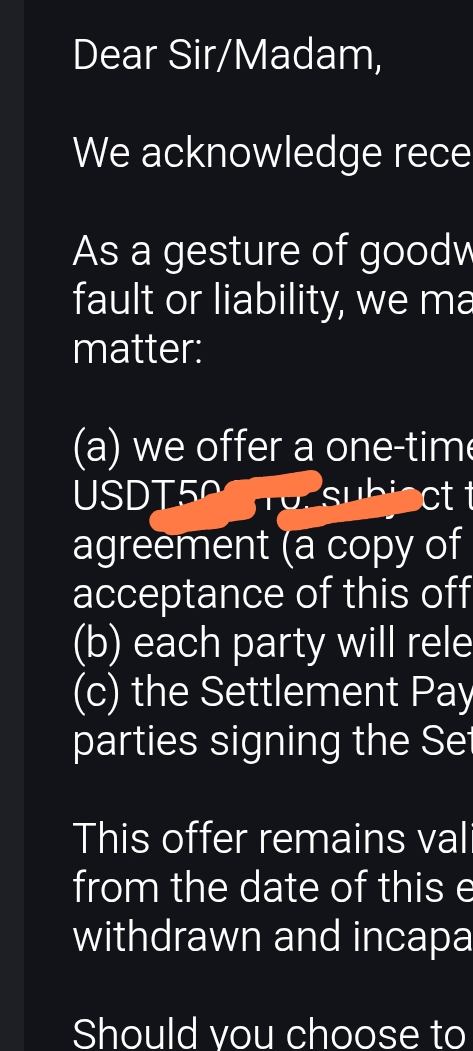
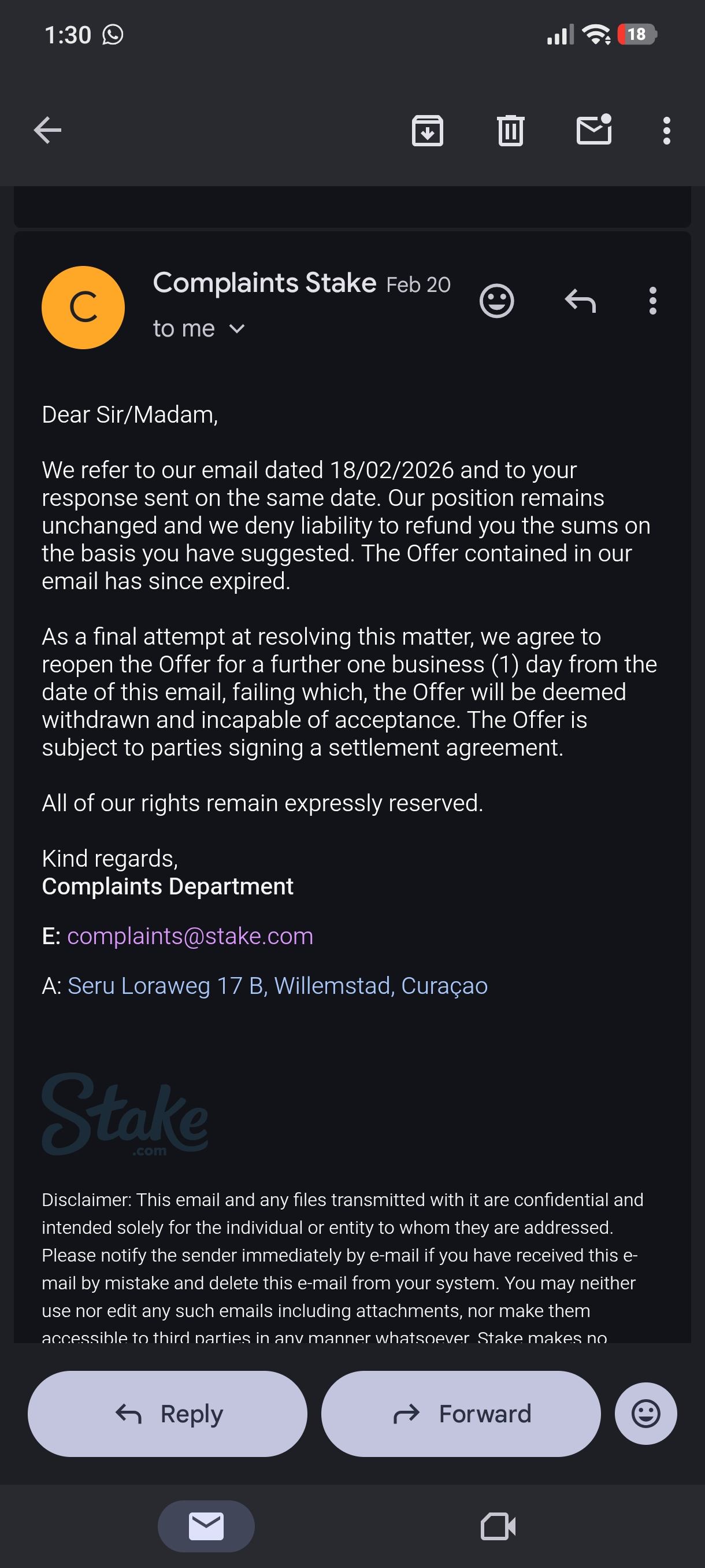
I am a severe gambling addict. I permanently self-excluded from Stake, and my account was closed. They have emails from me containing explicit, desperate threats of self-harm due to my addiction.

Despite this, Stake allowed me to open a new account. I didn't use any high-tech hacker bypass; I entered my regular personal information. The most shocking part? Stake accepted and verified the EXACT SAME PASSPORT I used on my permanently self-excluded account. I was allowed to deposit and lose a massive amount of money that will take me years to pay off. The account was ONLY blocked when I personally begged them to close it again.

My question to Martin was simple: Why wasn't my account instantly and automatically blocked the second I entered the exact same information and uploaded the exact same government ID?

Matching a passport is the most basic level of KYC. If "Self-Exclusion" means anything, the system should instantly block a returning addict at the verification stage.

Instead of holding Stake accountable for this catastrophic failure in their system, Martin lazily closed my complaint, blaming ME for "circumventing" their safeguards. How is uploading the identical passport "circumventing" anything? It’s Stake’s system that is completely blind and designed to accept deposits from vulnerable, self-excluded addicts.

Martin didn't want to deal with the facts; he just wanted to close the ticket and move on. Do not expect fairness if your case is handed to someone who doesn't even bother to read how a casino's system intentionally fails to protect vulnerable addicts.

Editado
Wol97
há 2 dias
uspt

Hi,

thank you for sharing your experience so openly. I understand that what you are describing is a very difficult situation, and we do not take statements about gambling addiction lightly.

However, it’s important to clarify how these cases are evaluated in practice.:

Self-exclusion is a responsible gambling tool designed to help players limit access to gambling platforms, but it does not replace personal responsibility entirely. In your case, the key factor was that a new account was created using your own personal information, and access was regained despite the prior exclusion. From our perspective, this falls under bypassing the casino’s safeguards, even if no technical workaround was used.

We all hear your argument regarding identity verification and passport matching. While KYC systems are indeed intended to identify players, they are not universally designed as a foolproof mechanism to automatically block all returning users across every scenario. This is why responsible gambling frameworks always combine operator-side tools with player-side responsibility and, importantly, external support measures.

Regarding refunds, we know it may feel like a fair resolution given the circumstances, but refunds are not a solution to gambling harm. Granting them in situations where a player regains access and continues playing would create a precedent that is not sustainable or fair across cases, and it would not address the underlying issue.

What matters most here is preventing further harm. If you feel that controlling gambling is difficult, we strongly encourage seeking professional help and using additional blocking tools that operate outside of individual casino systems.

Well, I understand that this is not the outcome you were hoping for, but the decision was made based on the available evidence and our established policies, not due to a lack of review or consideration.

I genuinely hope you are able to find the support you need moving forward.

há 2 dias
uspt

Your response ms radka is an insult to anyone suffering from gambling addiction and a complete betrayal of Responsible Gambling.

First, the hypocrisy is glaring. There are hundreds of identical complaints on your website where Casino Guru correctly held casinos responsible for failing to enforce self-exclusion when identical IDs were used. Yet, mysteriously, when it comes to Stake Casino, this standard disappears.

To claim that "self-exclusion does not replace personal responsibility" shows a dangerous ignorance of addiction. The ENTIRE purpose of self-exclusion is to act as a hard barrier exactly when a player loses control. If an addict could just rely on "personal responsibility," this tool wouldn't need to exist.

Furthermore, it is ridiculous to claim I "bypassed" safeguards when I registered with my real details and uploaded the EXACT SAME PASSPORT. This is not a bypass; it’s Stake intentionally leaving the door open for a known addict.

Mr. Martin clearly lacks the expertise to handle severe Responsible Gambling complaints. He ignored the core issue of KYC failure just to protect the operator and close the case quickly.

This complaint will remain a mark of shame on Casino Guru. You provide legal cover for predatory casinos instead of protecting vulnerable players.file

Wol97
há 2 dias
uspt

Well, I understand that this situation is extremely frustrating, and I do not question that gambling addiction is a serious issue. That is precisely why tools like self-exclusion exist.

However, your interpretation of how these tools work is not entirely accurate.

Self-exclusion is indeed meant to create a barrier during moments when control is difficult. But in practice, it is one layer of protection, not an absolute guarantee that a player will never be able to access gambling again under any circumstances. No system in the industry is technically capable of providing a 100% fail-proof block across all possible scenarios.

This is also why all responsible gambling frameworks combine:

operator-side restrictions (such as self-exclusion),

and player-side responsibility,

along with external support tools and professional help.

Regarding your claim about "identical cases":each complaint is evaluated individually based on the full context and evidence. Similar elements (such as reused documents) do not automatically lead to identical outcomes, especially when there are clear indicators that access was regained by the player despite prior exclusion.

As for the passport argument: using the same ID does not automatically mean the system must block the account at the verification stage in every case. While ideally such matches should be detected, their absence does not shift full responsibility to the casino when a player actively creates a new account and continues gambling.

We also need to address one important point directly:

presenting this situation as solely a "KYC failure" is not accurate. The core issue remains that gambling continued after self-exclusion, which inherently involves player-side action.

So, I understand that you disagree with the outcome, but the complaint was not closed to "get rid of it," nor to protect any operator. It was reviewed based on the available evidence and our established evaluation principles, which are applied consistently across cases.

At this point, continuing to debate responsibility will not change the outcome. What matters most now is preventing further harm. I strongly encourage you to seek professional support and use additional blocking tools that operate beyond a single casino.

há 2 dias
uspt

Your attempt to redefine "Self-Exclusion" to absolve the operator of gross negligence is logically and ethically flawed. Let’s break down your arguments:


1. The True Definition of Self-Exclusion vs. Account Closure

You claim self-exclusion "does not replace personal responsibility." If a severe addict in a state of relapse could simply rely on "personal responsibility," they would not need self-exclusion. If the burden falls entirely on the player, then what you are describing is just a standard "Account Closure." The entire regulatory distinction of Self-Exclusion is that the operator assumes a Duty of Care to actively use the player's data to block them when their personal responsibility inevitably fails.


2. The Absurdity of the "KYC is Not Foolproof" Argument

You argue that KYC systems cannot block users across "every scenario." I did not use a complex technical bypass, a fake name, or a disguised identity. I uploaded the EXACT SAME government-issued passport. A matching government ID is a 100% deterministic data point. If a multi-million dollar casino’s KYC software cannot flag a duplicate, identical passport belonging to a permanently self-excluded player who previously threatened self-harm, their system is not merely "flawed"—it is fundamentally broken and actively negligent.


3. The "Active Action" Fallacy

You state the core issue is that the player "actively created a new account." However, gambling is a two-way transaction. The casino took the "active action" to verify and approve my identical ID and accept my deposits. They possessed the exact data required to stop the transaction at the verification stage, yet they negligently approved it.


By accepting this level of negligence, Casino Guru is setting a highly dangerous precedent. You are telling casinos: You do not need functional KYC software to protect self-excluded players, because if your system fails to detect an identical passport, Casino Guru will simply blame the addict for relapsing.

há 2 dias
uspt

For your reference on international regulatory standards: > When a casino’s KYC system fails to identify a self-excluded player, global regulators hold the CASINO responsible, not the addict.


The UK Gambling Commission fined 888 Holdings £7.8M and ordered them to refund £3.5M to self-excluded players due to a technical failure in matching accounts (Source).


The Pennsylvania Gaming Control Board fined BetMGM over $260,000 recently for failing to prevent self-excluded individuals from depositing (Source).


Your decision to protect Stake Casino completely contradicts established international Responsible Gambling laws.


https://www.theguardian.com/society/2017/aug/31/gambling-firm-888-fined-online-bookmaker-problem-gamblers

https://sbcamericas.com/2025/01/30/betmgm-fined-261k-in-pennsylvania/

https://sbcamericas.com/2025/01/30/betmgm-fined-261k-in-pennsylvania/

Wol97
há 2 dias
uspt

Thank you kindly for your efforts.

We approach player complaints based on the Casino Guru Fair Gambling Codex because it is applicable to every casino worldwide no matter its license, owner or country specifics.

The Pennsylvania Control Board is not related to the Curaçao-licensed casinos; the same goes for the UKGC, for example.

file

So both the casino and the player are responsible for their actions. Player can start by reviewing the casino license and its limitations; consider that an example, please.

há 2 dias
uspt

You speak of "player responsibility" and your "Fair Gambling Codex." I have a simple question: Does your Codex consider it "fair" when a casino verifies the EXACT SAME PASSPORT of a permanently self-excluded addict and allows them to deposit?

If an addict had "personal responsibility" during a relapse, self-exclusion tools wouldn't need to exist. You are using the weakness of the Curaçao license as an excuse to justify Stake's intentional KYC failure. Stop blaming the victim for the casino's broken system.

Wol97
ontem
uspt

Hi, I get that you're asking these questions because you want one answer that would wash away the broader context. Sadly, this isn't just one question. You must be going through a lot, but the most important thing is that you stop playing. You can tell that the level of safety you expect from offshore casinos isn't really there.

No one is blaming you, but having the wrong ideas will only make things worse.

ontem
uspt

Thank you for finally admitting the truth: 'the level of safety you expect from offshore casinos isn't really there.


By admitting this, yet refusing to hold Stake accountable for verifying the EXACT SAME PASSPORT of a self-excluded addict, you prove Casino Guru is just a shield for predatory casinos. There are no 'wrong ideas' here, just a broken KYC system that you refuse to penalize.

Adicionar post

flash-message-reviews
Avaliações dos utilizadores – Escreva a sua avaliação e partilhe a sua experiência
2000eur push_alt
Partilhe os seus ganhos nas slots da Pragmatic Play e tenha outra possibilidade de ganhar com o Casino Guru!
Trustpilot_flash_alt
Qual a sua opinião sobre o Casino Guru? Partilhe a sua opinião

Siga-nos nas redes sociais – Posts diários, bónus sem depósito, novas slots e muito mais

Subscreva a nossa newsletter para bónus sem depósito, torneios grátis, novas slots e muito mais.